
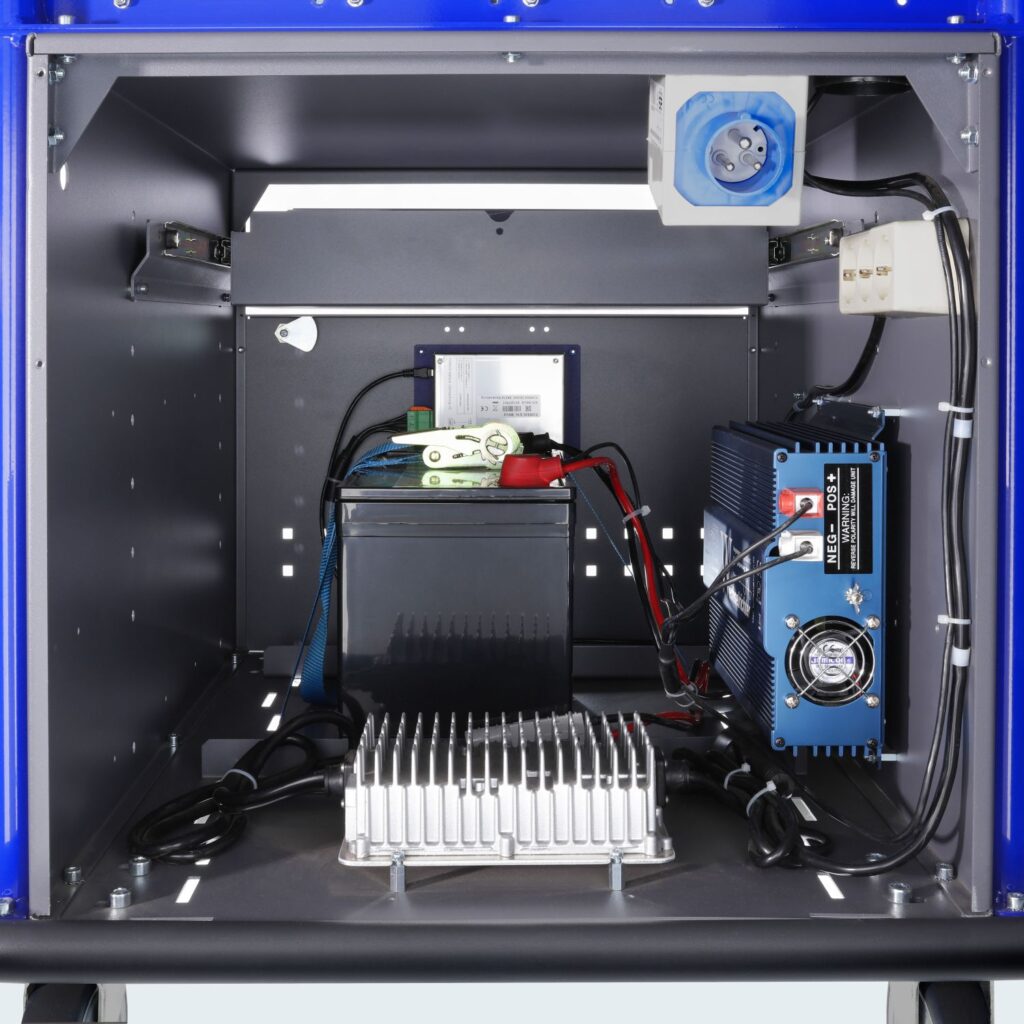
Transport regulations for LiFePo batteries
Affected FORSIS Products or Series:
- MOBILE IT – Mobile workstations
- MOBILE series – Forklift terminal

Battery Act – BattG
According to the Battery Act (BattG), the distributor of batteries is obliged to take them back and dispose of them properly.
This does not include transportation and packaging – the customer shares responsibility here.
Requirements regarding packaging and transport safety must be observed.
Packaging of battery units for return
The shipment of battery units by road is subject to the requirements and guidelines of ADR. However, ADR permits special regulations.
ADR distinguishes between lead-acid and lithium batteries.
Mode of Transport: Road ADR
| Battery type | Battery condition | Labeling | Dangerous goods class | Packing instruction | ADR special provision |
| Lead-gel / leak-proof | New | no | UN2800 | P003/PP16 | SV598 a. |
| Used | P801 | SV598 b. | |||
| Old and fully discharged | P801 | ||||
| mechanically damaged | On-site disposal | no shipping possible | |||
| Lithium iron ion LiFePo | New | UN3480 / UN3481 in equipment | P903 Packing Group II | Requirement SV230 / UN38.3 + testing requirement + quality summary | |
| Used | P903 Packing Group II / State of charge below 30% | ||||
| Old | P903 Packing Group II / discharged (5-10%) | SV377 + special labeling “Lithium battery for disposal” | |||
| Mechanically damaged | UN840 | P908, P911 / Disposal according to BattG. | Shipping only in special containers with labeling in conjunction with SV376 |
Battery Replacement for Mobile Workstations
In our download area, you will find additional information on this topic.
Access is available if you are a FORSIS customer and have registered with our service team.

Contact the FORSIS Service Team
Further information is always available from our service team.